
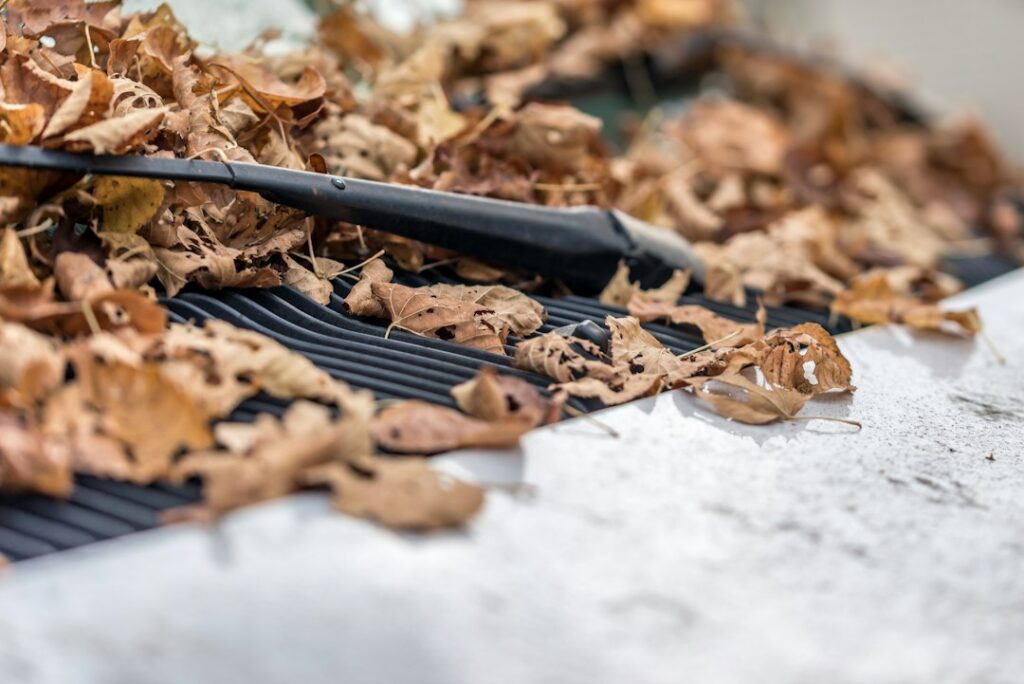
Removing debris from a roof is usually a simple maintenance task when the roof is low, dry, and easy to reach from a stable ladder. Leaves, twigs, pine needles, seed pods, and small branches should be cleared before they hold moisture, block drainage, or hide damaged shingles. Steep roofs, wet surfaces, heavy debris, and storm-related damage require a more cautious approach.
What debris should be removed from a roof?
Roof debris includes anything that does not belong on the roof surface, such as:
- Leaves and pine needles
- Small branches and bark
- Windblown litter
- Bird nests or accumulated organic material
- Moss, algae, and leaf-covered damp spots
- Granules or shingle pieces that may indicate roof damage
In Silver Creek, seasonal wind, lake-effect weather, wet autumn conditions, and winter storms can move branches and leaves onto roofs quickly. Debris is especially likely to collect in valleys, behind chimneys, around skylights, near roof edges, and below overhanging trees.
The goal is not to make the roof look spotless at all times. The goal is to prevent trapped moisture, blocked drainage, and concealed damage.
Is it safe to remove roof debris yourself?
It may be safe to remove light debris from the ground or from a low-slope roof using an extension tool. Walking on the roof becomes more hazardous when the surface is steep, wet, icy, moss-covered, brittle, or difficult to access.
Do not climb onto a roof if:
- The shingles are wet, frosted, or covered with moss
- Wind is strong enough to affect balance
- The roof has a steep pitch or multiple levels
- You see sagging, broken decking, exposed underlayment, or major storm damage
- The ladder cannot rest securely on level ground
- Power lines are near the work area
- You are not comfortable maintaining three points of contact
Roofing materials can also become fragile with age. Older shingles may crack under foot pressure, and walking in the same area repeatedly can loosen granules or damage flashing. A cautious decision before climbing is safer than trying to manage a fall or create additional damage.
What tools are useful for clearing debris?
The safest basic tool is a roof rake or telescoping leaf rake designed to pull debris toward the roof edge while the user remains on the ground. A soft-bristled broom may work on a low, accessible roof, but it should be used gently.
Helpful equipment may include:
- A roof rake with a non-abrasive head
- Work gloves
- Safety glasses
- A stable extension ladder, if ladder access is necessary
- Non-slip footwear
- A tarp or yard-waste container
- A garden hose for limited rinsing around gutters, used only when freezing conditions are not present
Avoid metal rakes, shovels, pressure washers, and sharp tools. They can scrape off protective granules, tear membranes, bend flashing, or damage gutter components.
A leaf blower can remove loose, dry material from some low-slope roofs, but it may scatter debris into gutters, windows, gardens, and neighboring areas. It should not be used on loose shingles or near people, vehicles, or exposed wiring.
How do you remove debris from the ground?
Ground-based removal is often the least hazardous method. Stand well away from the roof edge and pull loose material downward with a roof rake. Use light strokes rather than forcing the rake through compacted piles.
Work from one section at a time. Start near the ridge only if the tool can reach safely, and avoid dragging the rake sideways across shingles. Pull debris in the direction of the roof slope, allowing it to fall onto a tarp or clear area.

Do not stand directly below the working edge. Branches and clumps of wet leaves can fall farther out than expected. Keep children, pets, and other people away from the drop zone until the work is finished.
After the roof surface is cleared, collect debris from the ground and inspect the area for nails, broken shingle pieces, and sharp branches.
How should debris be removed from a low roof?
A low roof may be accessible with a properly positioned ladder, but ladder safety still matters. Place the ladder on firm, level ground and keep its feet clear of mud, ice, loose gravel, and wet leaves. The ladder should extend above the roof edge enough to provide a secure handhold when stepping off or returning.
Use a roof rake from the ladder rather than climbing onto the roof whenever possible. Never reach sideways so far that the ladder shifts or your body moves beyond the rails.
If stepping onto a low roof is unavoidable, use a dry, stable surface and avoid stepping on skylights, vents, flashing, gutters, or visibly damaged shingles. Do not carry bulky tools while climbing. Raise tools with a line after reaching a secure position.
Should moss, wet leaves, or stuck debris be scraped off?
Stuck debris should not be removed by aggressive scraping. Wet leaves may be lifted carefully by hand while wearing gloves, but pulling forcefully can remove granules or loosen shingles.
Moss is more complicated. It can grow beneath shingle edges and hold moisture against the roof. Scrubbing, power washing, or pulling large moss mats can damage the roofing surface. Small areas may sometimes be loosened gently, but extensive growth, recurring moss, or moss attached beneath shingles should be treated as a roof-condition issue rather than ordinary sweeping.
Avoid applying household chemicals without confirming that they are suitable for the roofing material and nearby plants. Runoff from cleaning products can harm vegetation, soil, or water systems.
What should be checked after the debris is removed?
A visual inspection from the ground or a safe ladder position can reveal problems that were hidden by leaves and branches. Look for:
- Missing, curled, cracked, or lifted shingles
- Exposed nail heads or underlayment
- Damaged flashing around roof penetrations
- Dents from hail or falling branches
- Sagging roof areas
- Gutters that remain full after debris is removed
- Water stains on soffits, fascia, or exterior walls
Check roof valleys and drainage paths carefully. A small amount of debris can redirect water beneath shingles or toward siding. Gutters and downspouts should also be checked, but do not lean a ladder against the gutter itself because it can deform or pull away from the roofline.
If debris fell during a storm, document visible damage with photographs from the ground before moving anything substantial. Large branches, exposed roofing layers, and unstable structures are not appropriate for routine do-it-yourself cleanup.
How often should roof debris be cleared?
Inspection is sensible after major wind, heavy rain, or early snow, and again after leaves have fallen. Homes beneath mature trees may need more frequent checks than homes with open surroundings.
A practical routine is to inspect the roofline, valleys, gutters, and downspout outlets several times during autumn and once after severe winter weather. Removing small amounts of loose debris early is easier than clearing a saturated pile that has frozen in place.
The safest approach is to use ground-based tools whenever possible, work only in calm and dry conditions, and treat any sign of structural or storm damage as a reason to stop rather than continue climbing.
